
Finding a signature scent sounds simple until you actually start looking for one.
There are thousands of fragrances, endless recommendations online and a new perfume seemingly going viral every week. It’s very easy to end up asking “What’s the best fragrance?” when the better question is “What fragrance actually feels like me?”
We don’t think finding your signature scent should begin with learning complicated fragrance terminology or buying whatever currently has the most hype.
It should begin with knowing yourself.
From there, the process is surprisingly simple: discover the kind of scents you’re naturally drawn to, smell the fragrances that define those styles, explore a little deeper, and eventually spend enough time with your favourites to see which one genuinely belongs in your life.
And don’t rush it. The searching, testing and changing your mind is part of the fun.
Here is the simple six-step process we’d use to find a signature scent that actually feels like you.
Step 1 — Know Yourself Before You Choose the Perfume
Before smelling anything, start with yourself.
What is your personality actually like? What do you genuinely enjoy? What do you dislike? And perhaps most importantly, what would you choose if nobody online had told you what you were supposed to like?
Trends can be useful for discovering fragrances, but they shouldn’t decide your signature scent. If the fragrance everyone is talking about genuinely excites you, brilliant. If it doesn’t, move on.
Then think about what you want your signature scent to do.
Do you want something you can wear almost every day — to work, weekends and ordinary life? Or are you looking for the fragrance that represents you when you’re dressed up, going somewhere special and feeling at your best?
Those can lead to very different choices.
Don’t start by asking what perfume suits everyone else. Start by deciding what needs to suit you.
Step 2 — Find Your Scent Direction
Now start smelling — but keep it simple.
You don’t need to understand every fragrance family or memorise dozens of notes. Start by trying a few broad scent directions:
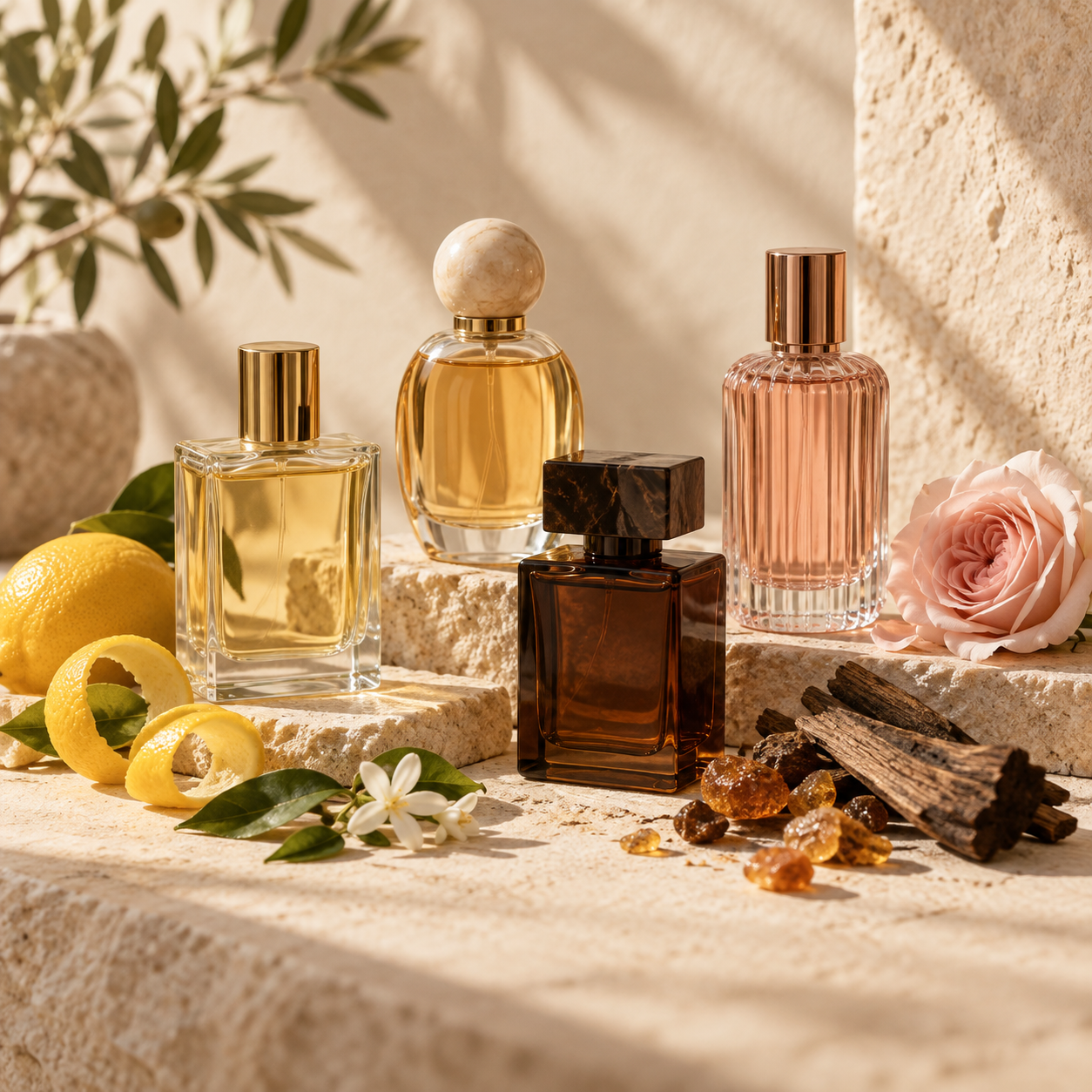
Fresh · Citrus · Floral · Gourmand · Spicy/Woody · Dark
Fresh covers the clean, airy, soapy and aquatic side of fragrance. Citrus gives you brighter lemon, bergamot and orange styles. Floral takes you towards rose, jasmine and other flowers. Gourmand explores vanilla, caramel and creamy sweetness. Spicy and woody fragrances bring warmth, woods and spices, while the darker direction takes you towards oud, tobacco, leather and incense.
Don’t worry about choosing one immediately. Just smell.
You may discover that you dislike something you expected to love, or become fascinated by a style you’d never considered before.
At this stage, you’re not looking for the perfume. You’re simply answering a much easier question:
Which direction makes me want to smell more?
Step 3 — Smell the Fragrances Everyone Talks About
Once you’ve found a scent direction that interests you, start with the obvious fragrances.
Try the classics, the bestsellers and even the ones surrounded by hype. There’s nothing wrong with starting with famous perfumes — they became reference points for a reason.
But you don’t have to buy them.
Instead, use them to understand your taste. You might love the sweetness but wish it were less intense. You might enjoy a famous woody fragrance but want something warmer. Or you may finally smell a fragrance everyone loves and realise it simply isn’t for you.
That’s useful information.
The hype shouldn’t choose your signature scent. It should help you build a reference point.
Once you know what you like — and what you’d change — your search becomes much easier.
Step 4 — Explore Your Scent Family
Once you know the direction you enjoy and you’ve smelled some of its famous reference points, this is where the real exploration begins.
Start researching within that scent family. Read reviews, browse fragrance websites and keep a simple list of anything that grabs your attention. Don’t worry if the list becomes quite long.
Then visit somewhere you can actually smell them — a department store, fragrance boutique or perfume lounge — and start exploring.
Your list will change quickly. Some fragrances will disappear after one spray. Others will surprise you completely. You might discover a particular note or style that sends your search in a direction you hadn’t considered.
Allow your list to get shorter, longer and change direction.
This will probably be the longest part of finding your signature scent, but don’t treat it like homework. For us, this is the fun part.
You’re no longer looking at what everyone else recommends. You’re gradually building your own taste.
Step 5 — Stop Exploring and Start Comparing
Eventually, a few fragrances will keep pulling you back. That’s your signal to stop exploring widely and start testing deeply.
Go back and smell those favourites again — preferably on different days or visits. A fragrance that impressed you once might feel completely different the second time.
When you’re seriously testing a contender, avoid spraying lots of other perfumes at the same time. Give your nose a chance to concentrate on what you’re actually considering.
If you’re comparing a few on skin, remember exactly where you’ve sprayed each one and keep returning to those spots over the next few hours. Don’t judge only from the opening. Pay attention to which fragrance you still enjoy once everything has settled.
This is also when we would start asking a partner, close friend or family member what they think. Their opinion shouldn’t make the decision for you, but it can be valuable — particularly because these are the people who may eventually associate that smell with you.
Most importantly, notice which fragrance you instinctively keep returning to.
Don’t ask, “Which one is technically the best?” Ask, “Which one do I keep wanting to smell again?”
Step 6 — Take the Best-Day Test
If you’re still torn between a few fragrances, don’t buy the full bottle yet. Buy decants and live with them first.
Wear them away from the perfume counter. Try one after a shower when you’re fresh and getting ready. Wear it to an occasion that matters to you. See how it feels several hours later when the excitement of the first spray has disappeared.
And then try what we call the Best-Day Test.
Imagine yourself on one of your best days. It can be a real memory or a day that hasn’t happened yet. You’re wearing exactly what you want to wear, going somewhere you genuinely want to be, and feeling completely comfortable and confident in yourself.
Is this how you imagine yourself smelling that day?
Keep listening to the opinions of people you trust, but don’t turn their opinions into a vote. Ultimately, you’re the person who needs to want to reach for that bottle again and again.
Plenty of perfumes will smell good on you.
Your signature scent should feel like it belongs to you.
Your Signature Scent Doesn’t Have to Impress Everyone
Finding a signature scent isn’t about discovering the fragrance with the highest rating, the biggest compliment factor or the most impressive bottle.
It’s about reaching the point where you smell something and think, “Yes. This feels like me.”
Your choice might be a bestseller. It might be niche, affordable, Arabian, designer or something hardly anyone around you recognises. None of that matters if you genuinely enjoy wearing it.
And your signature doesn’t have to stay the same forever. Your taste will develop, your life will change and another fragrance may eventually feel more like you.
That’s part of the pleasure of fragrance.
Don’t search for the perfume everyone thinks you should wear. Find the one you miss when you’re not wearing it.
Leave a Reply